
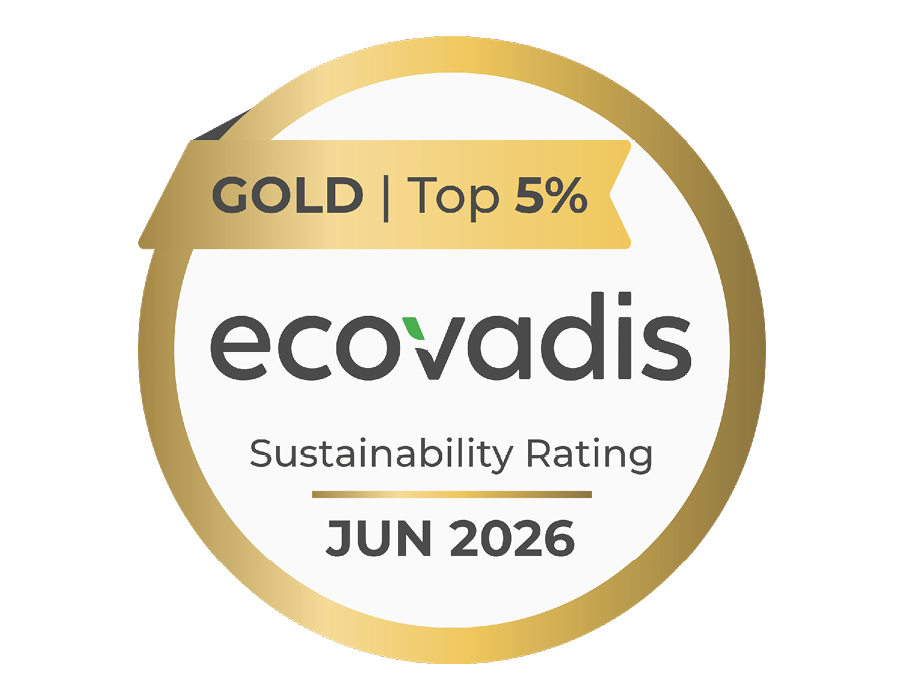
We were last assessed in June 2026, and the result was 83 points out of 100, our highest to date, measured against an average of 59 across the more than 175,000 companies EcoVadis rates each year. The score carries a Gold medal, which EcoVadis awards to the top 5% of the companies it rates.
The four themes
The assessment is built around four themes, each scored separately. Environment covers energy and emissions, water, materials and waste, and the environmental profile of the product itself through its life. Labour & Human Rights takes in health and safety, working conditions, labour relations, training and career development, and human rights in the wider workforce. Ethics looks at business conduct, principally corruption risk, competition practice and the management of information. Sustainable Procurement examines something one step removed from the company's own operations, namely how it carries environmental and social requirements into its own purchasing.
The four themes
The assessment is built around four themes, each scored separately. Environment covers energy and emissions, water, materials and waste, and the environmental profile of the product itself through its life. Labour & Human Rights takes in health and safety, working conditions, labour relations, training and career development, and human rights in the wider workforce. Ethics looks at business conduct, principally corruption risk, competition practice and the management of information. Sustainable Procurement examines something one step removed from the company's own operations, namely how it carries environmental and social requirements into its own purchasing.
What earns points inside a theme
Within each theme EcoVadis works through the same dimensions. It asks what policies exist, what external commitments the company has signed, what measures it actually operates, which certifications it holds, what it reports publicly, and what independent sources say about it through a screening EcoVadis calls 360° Watch. Those dimensions are weighted internally, so a theme score is not the average of its parts.
The distinction between a policy and a measure is the one that matters most to a buyer reading a rating. A policy earns credit for existing and for being specific. A measure has to be evidenced, which means documented procedures, recorded results, audits, training records, management systems that someone outside the company can inspect. We scored full marks on measures in three of the four themes, Environment, Labour & Human Rights and Sustainable Procurement. That is the column describing what happens on an ordinary working day.
Here is an illustration, and it describes no actual customer. Imagine a beverage group running a supplier evaluation where ESG accounts for a fifth of the total score, and where the scoring rubric converts EcoVadis medals into points. A Gold supplier clears that gate and the buyer's file is complete in a single step. The more experienced evaluators on that team will go further and ask for the theme breakdown as well, because the medal answers a threshold question while the four theme scores answer a risk question. Both answers exist in the same document.
What Gold says about the supply chain
Sustainable Procurement improved for the third consecutive year in 2026, and it is the theme that reaches furthest beyond our own factory gates. It assesses whether sustainability requirements travel into purchasing decisions: supplier codes of conduct, risk screening before a supplier is approved, audits, and what happens when a finding turns up. A customer evaluating us is therefore also getting an independent read on how we evaluate our own suppliers, one tier further upstream than the questionnaire itself reaches.
That matters more each year as reporting obligations extend along value chains.
Take a second illustration, again hypothetical. A retailer with its own due diligence reporting to produce needs to say something defensible about labour conditions in the chain behind a private label product, and the supplier it asks sits two tiers away from the raw material. An EcoVadis theme score for Labour & Human Rights covers the supplier's own workforce, and the Sustainable Procurement score speaks to how that supplier manages the tier behind it. Neither number resolves a specific question about a specific site, and together they tell the retailer how much of the work has already been done by someone independent. The remaining gap is then a short conversation.
Where the findings point next
Each assessment returns a finding list alongside the score, and that list is the reason to repeat the exercise annually. Looking across all four themes, certifications is the dimension where the assessment sees the most room: full marks under Environment, where ISO 14001 is in place, and half marks under the other three. We also hold ISO 45001, we are a signatory to the UN Global Compact, and our emissions reduction targets are set in line with the methodology of the Science Based Targets initiative, so the systems and the commitments behind those themes are already running. Extending third-party certification further across them is a piece of work with a known scope, which is a comfortable kind of improvement to have identified.
Using a rating well
A rating has a validity window, and ours runs to 10 June 2027, at which point a fresh assessment replaces it. Medal thresholds move over time as the assessed population improves, so a score compared across years says more than a medal compared across years. For a buyer building an evaluation model, the practical reading is that the medal answers whether a supplier passes a threshold, while the theme scores and the findings behind them show where the performance actually sits and which way it is moving.


